
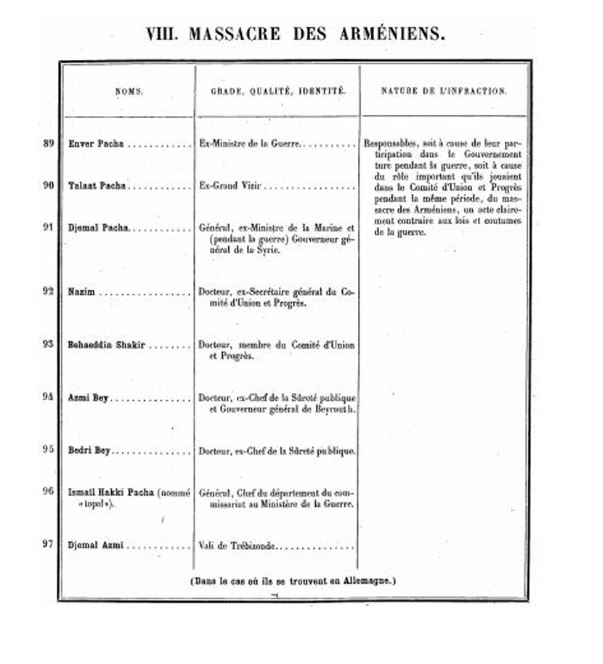
Today, as debates continue in international forums and in the domestic discussions of various states regarding the recognition of the genocide committed against Armenians and the positions adopted by different countries, it is necessary to return to the chronology of historical facts and their legal foundations. There is one fundamental documentary truth that is often ignored or silenced: the genocide committed against Armenians was first recognized by the very state under whose authority this crime was planned and carried out.
A Legal Precedent: The Constantinople Military Tribunals
In 1919–1920, the Extraordinary Military Tribunals of the Ottoman Empire in Constantinople held a series of trials against the key leaders of the Young Turk regime, including Talaat, Enver, Cemal, Nazım, and others. They were accused of state-organized mass killings and deportations and were sentenced to death in absentia.
These trials were not merely political declarations; they constituted legal recognition of the crime and official judicial verdicts. The records of the trials, published in the Ottoman government’s official gazette, Takvim-i Vekayi, prove that the events that took place were not ordinary consequences of war but rather a deliberate and systematic action carried out at the state level.
Chronological Priority
This legal act took place at a time when the international community had not yet begun discussing this issue.
It occurred before Raphael Lemkin introduced the term “genocide” and achieved its recognition in international law, and decades before Cyprus (1982) became the first state to officially recognize the deportations and massacres of Armenians as genocide.
The Government of the Republic of Western Armenia does not demand that the Republic of Turkey create a new legal or historical truth. It only demands that Turkey recognize the legal responsibility and court verdict inherited from its predecessor, the Ottoman Empire, and ensure the implementation of the rights of Armenians both as an indigenous people and regarding the recognition of the territory of Western Armenia as a state.
Political Consequences and the Present Imperative
Although the Republic of Turkey, established under the leadership of Mustafa Kemal, rejected this legal legacy and adopted a policy of denial, the force of historical and legal fact remains unchanged.
In order to present the Armenian position more convincingly in international organizations and in academic and public discussions, special attention must be given to the fact of the admission of guilt itself. When the reality of a crime is proven not only by the testimony of the victims but also by the official verdicts of the perpetrating state itself, it becomes absolute and undeniable.
These two historical documents are directly related to the history of the genocide committed against Armenians. Their detailed descriptions are presented below.
First Photograph (Takvim-i Vekayi)
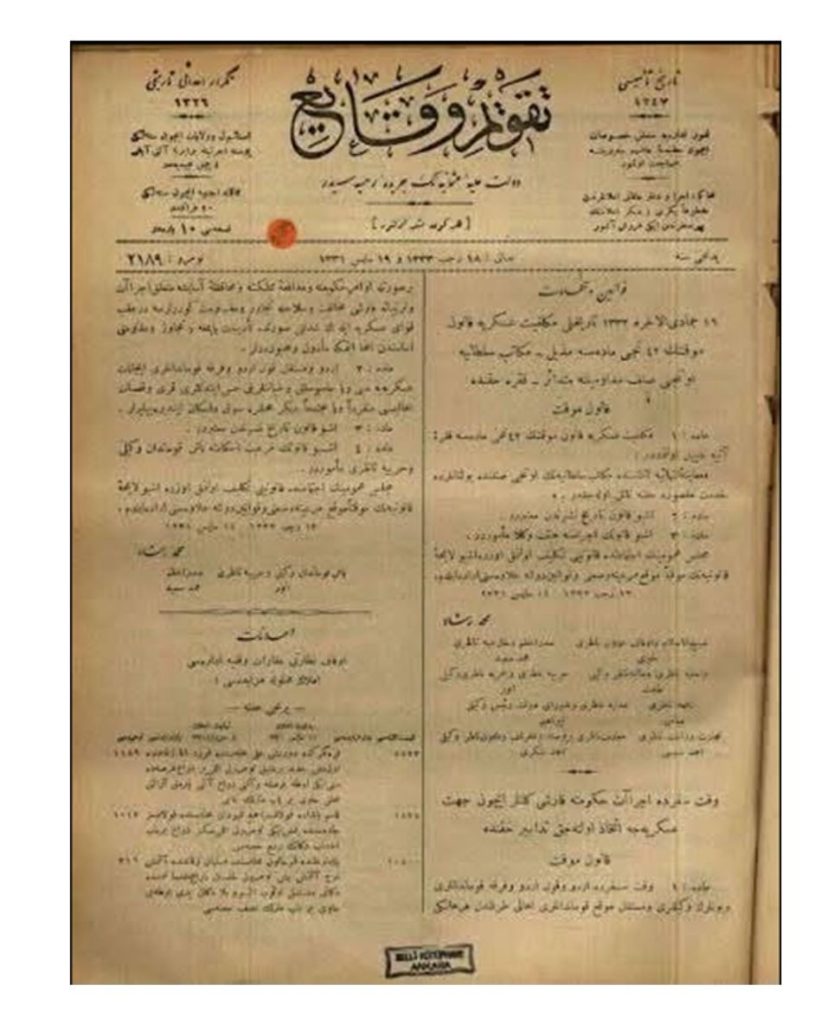
This document is a page from Takvim-i Vekayi (No. 2189), the official gazette of the Ottoman Empire, published on June 1, 1915 (June 1, 1331, according to the Ottoman calendar).
Content
In the lower section of the left column is printed the well-known “Law on Deportation” (Tehcir Kanunu), whose official title is: “Temporary Law on the Measures to Be Taken by the Military Against Those Opposing Government Orders During Wartime” (Vakt-i Seferde Hükûmete Karşı Gelenler Cihet-i Askeriyece İttihaz Olunacak Tedabir Hakkında Kanun-ı Muvakkat).
Connection to the Genocide
This is precisely the text of the law and order on the basis of which the Ottoman government (the Young Turk regime) organized the mass deportation and extermination of the Armenians of Western Armenia to the deserts of Syria.
The law authorized the military command to “deport” any person or population considered a threat to state security.
Second Photograph (Vakit)
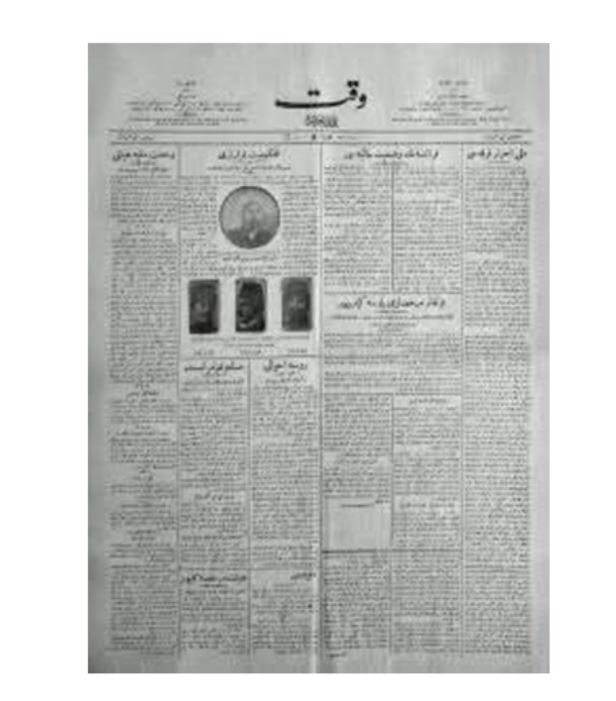
This photograph shows another well-known Ottoman daily newspaper, Vakit (“Time”).
Content
This issue of the newspaper was published after the First World War, during the armistice period of 1918–1919. The page contains photographs of Ottoman officials and government members associated with the crimes committed during the war years.
Connection to the Genocide
At that time, military tribunals had been established in Istanbul to investigate the crimes of the Young Turks (the Committee of Union and Progress), particularly the organization of the massacres and deportations of Armenians.
These newspapers regularly published details of the trials, the indictments, and photographs of the organizers of the crimes.
http://www.western-armenia.eu/news/Actualite/2017/GENESE_DU_GENOCIDE-VF-28.04.2013.pdf
President of the Republic of Western Armenia
Armenag Aprahamian