
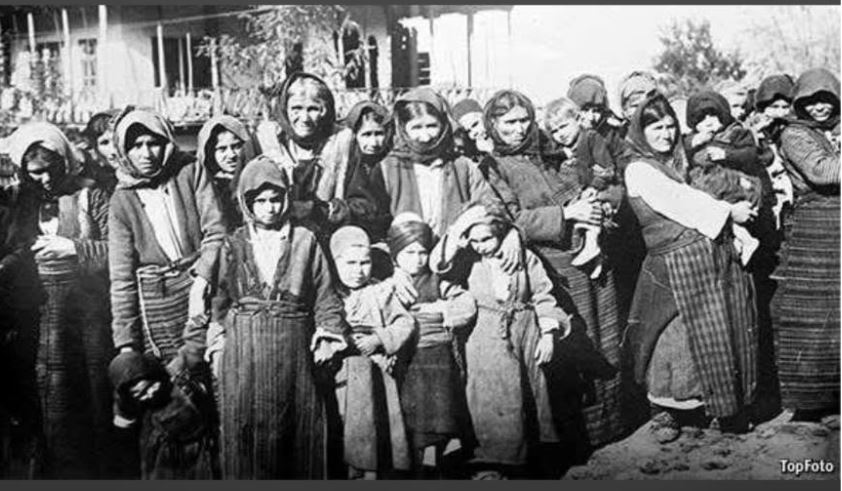
April is one of the heaviest mirrors of these lands; those who lack the courage to face the past continue their lives while avoiding confrontation with it.
One hundred and eleven years ago, Armenians, Assyrians, Chaldeans, Nestorians, and Pontic Greeks throughout the Ottoman Empire were subjected to systematic genocide. Killings, deportations, and looting took place simultaneously from Van to Karin, from Baghesh to Dikranagerd, from Constantinople to Adana, from Sebastia to Caesarea, and from Marash to Urfa.
Nearly two million Armenians and tens of thousands of Assyrians and Greeks fell victim to these atrocities. Women were subjected to enslavement, children were killed, and entire villages and towns were emptied of their inhabitants, leaving behind devastated cultural and economic heritage.
The article emphasizes that this tragedy was not accidental. It was carried out as part of an organized state policy involving various forces and armed groups. The crime was justified through ideological and religious interpretations, while human conscience, compassion, and justice were pushed aside.
However, the heaviest responsibility does not rest solely on the perpetrators. It also belongs to those who remained silent, acted out of fear, or became indirect participants for personal gain. According to the article, silence does not heal the wound; it deepens it and creates the danger of repetition.
Even today, these events are often denied or ignored, which the author believes has dangerous consequences for both the present and the future. Denial does not eliminate the truth; it distorts it and undermines public consciousness.
The article stresses that confronting the past does not mean seeking revenge. Rather, it means accepting the truth, restoring justice, and defending human dignity. Failure to acknowledge the past prevents future generations from inheriting genuine historical memory and human values.
It concludes with a simple but important question: How prepared are we to confront this truth and safeguard the final stronghold of memory and conscience so that history does not repeat itself?