
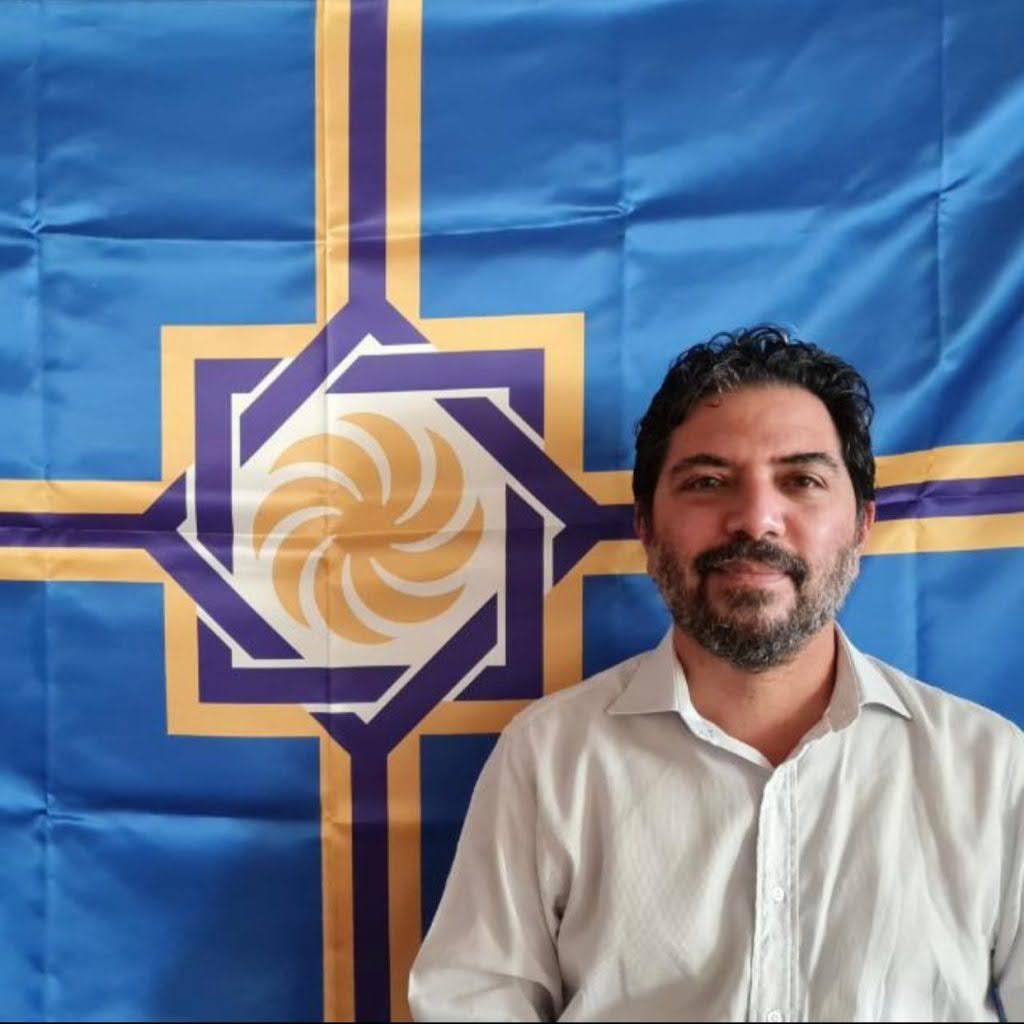
The Armenian status quo guarantees the appropriation of our lands by Turkey and Azerbaijan and leaves the present Republic of Armenia unprotected.
I will briefly elaborate on this idea, expecting your immediate response, not indifference, because the scenario presented may mean the end of the Armenian nation if we do not act immediately to change it.
The Armenian nation has a territorial, political, and legal reality that has an undeniable reflection in international public law.
The Armenian status quo presents to the world and to its own people that the territorial, political, and legal reality of the Armenian nation consists of the present Republic of Armenia of 1991 and the diaspora. (Until recently, Artsakh was also part of it, but after its complete annexation, many compatriots, guided by a “pragmatic” approach, excluded it as well.)
This is an objectively false and, therefore, deceptive interpretation of reality. Moreover, it is harmful to Armenian national interests.
And this is precisely the main problem before us: Armenian leaders present a false and harmful reality about Armenia to the Armenian people, while the nation builds its entire future on false foundations, which can only lead to the collapse of the homeland.
Let us consider clearly our real reality, that is, the reality of the Armenian people. This is not an opinion, but an objective reality.
International public law recognized a state called “Armenia” in 1920, and that recognition continues to remain fully in force. That territory included the entire territory of present-day Armenia (as it existed in 1991), Javakhk, which today is unlawfully administered by Georgia, Nakhijevan and Artsakh, which are territories occupied by Azerbaijan, as well as all the provinces of historical Armenia occupied by Turkey, while the western border was defined by the arbitral award of U.S. President Wilson.
It is also true that, apart from the territory administered by the present Republic of Armenia, our whole country is under occupation. However, this occupation does not mean that our provinces are lost, because they were declared Armenian and included within the internationally recognized state, which means that Armenia has been a subject of international law continuously since 1920. Our lands are awaiting liberation from Turkish appropriation.
The real mystery is why Armenian political leaders, in accordance with international geopolitical interests, have decided and continue to decide to ignore our country, which has existed since 1920, instead of seeking ways to claim and restore it.
Within Armenian circles, it is often said that the time has come to accept reality, and that the Treaty of Lausanne “buried” Armenia’s international rights acquired in 1920. This assertion is not only false, but also reveals the deep ignorance of those who express such absurdities without any legal basis. However, since the Armenian intelligentsia (if it exists at all) has long withdrawn from these discussions, such academic questions are discussed in cafés by people who have never read the Treaty of Lausanne, yet speak as if they possess the truth, making legal and political conclusions that unbelievably bring the Armenian people to the brink of collapse. The entire community is built on the false idea that only the Armenia of 1991 and the diaspora exist, which is convenient for the Turkish appropriation of our Armenian provinces, a situation that has continued with impunity for more than a century.
Until September 20, 1991, all Armenians in the world, without knowing it, were citizens of Armenia, the state recognized in 1920. However, from September 21, 1991, the situation changed radically with the creation of the Armenia of 1991. This Armenia was imposed on the Armenian community by global geopolitics with the aim that this Armenia, inherited from the Soviet Union and artificially constructed (which is why it is 35 years old, not 106), should become the only Armenia existing in the world. From that moment, the goal was to keep the indigenous population of Western Armenia (all of us) in complete ignorance, so that we would never know our international rights as an indigenous people, nor understand that we had been left outside the Armenia of 1991. At the same time, it was decided that the Armenians living in the Armenia of 1991 would be regarded as the only Armenians in the world.
The Armenian political leaders of the world enthusiastically accepted this situation, and we also joined them, trusting them. We all believed that we were included in the Armenia of 1991, but the reality of international law clearly shows that this is not the case.
That is why it is astonishing that political leaders, especially representatives of the diaspora, did not react in time to such capitulation (and continue to remain silent, ensuring the territorial appropriation committed against us).
This geopolitical experiment, confirmed by the Armenian status quo, aims to replace the Armenian state that has existed and been recognized since 1920 with this small, enclosed Armenian state of 29,743 km², which considers all citizens of Western Armenian origin as foreigners. To solidify this appropriation, they have also decided to appropriate the name, flag, and anthem of our country.
To accept this imposed reality automatically means to lose our territorial rights over all our ancestral provinces, even though they have already been recognized as Armenian and continue to remain so under international law. The factual nature of the appropriation carried out by the enemy is not decisive, because any appropriation ceases when it encounters a people determined to restore its rights.
The Armenia of 1991 has no right to any territorial expansion, because it was formed as a new state by the Declaration of Independence of August 23, 1990. Therefore, its main leaders, who deny the existence of the Armenia of 1920 (like the entire status quo, including diaspora leaders), openly declare that Mount Ararat is Turkish, that Artsakh and Nakhijevan belong to Azerbaijan, and make other similar statements which, when voiced by an Armenian, are so sacrilegious that they call into question their true belonging to Armenia.
Moreover, this attempt at appropriation also aims to deprive us and our generations of our Armenian identity by limiting us only to the citizenship obtained by place of residence.
With the artificial creation of the Armenia of 1991 and our exclusion from it as the indigenous people of Western Armenia and as citizens of the Armenian state recognized in 1920, we will forever lose our ancestral lands and cease to be Armenian if this attempt at substitution succeeds.
This appropriation is desirable for geopolitical powers in order to resolve the international problem that they themselves created in 1920. It is desirable for our enemies in order to continue appropriating Armenian ancestral lands at their will, as they have done for more than a century, so that soon the control of the small remaining country administered by Armenians will become merely formal. And it is also desirable for the entire Armenian status quo, whose leaders, both there and here, declare that the only Armenia in existence is the Armenia of 1991 and propose that you renounce your Armenian citizenship by becoming the supporter of a country that considers you a foreigner.
This is the main argument of this speech. According to this direction, historical Armenia has become a virtual reality, interesting only as a historical peculiarity, while the only real Armenia is the one created in 1991.
The reference made by state structures, political parties, and even by the manifesto signed by Soviet Armenian leaders to the “Armenia of 1918,” known as the First Republic, is a remembrance of a real historical event, full of emotion and national pride. But this page does not exist from the point of view of international public law, which recognized Armenia only in 1920, and later, for reasons contrary to national interests, also recognized the Armenia of 1991.
I repeat: international public law never recognized the Armenia of 1918 until the Armenian National Delegation, headed by Boghos Nubar, obtained international recognition. This recognition, signed together with the representative of the Armenian government of that time, Avetis Aharonian, was intended to create a unified Armenia in 1920, including all Armenians of the world.
According to international public law, the beginning of Armenia as a state starts on January 19, 1920, when the Council of the Paris Peace Conference carried out the first international recognition during that year.
Therefore, this description clearly shows how much the proposal of the status quo, according to which only the Armenia of 1991 exists and we must act as a strong diaspora to preserve it, is entirely contrary to Armenian national interests. This deprives us of our claim to territories which the world recognizes as Armenian, guarantees the arbitrary appropriation of Armenian sovereign and ancestral lands by Turkey and Azerbaijan, deprives us forever of our legal status as Armenians, and leaves the Armenia of 1991 completely unprotected, at the mercy of the enemy, without sufficient means for self-defense.
Armenian schools, which are managed by influential representatives of the established Armenian circles, distort Armenian history for their students and do not explain to future generations the truth of international public law. For these schools, the important fact of 1920 is not that we received impressive international recognition as a state, but that “Armenia was Sovietized.” They do not even explain that this referred only to the eastern part of the country.
Thus, instead of preparing fedayees who, at the necessary moment, would enthusiastically set out to liberate appropriated Armenia, it is precisely within Armenian schools that the lie continues that the Armenia of 1991 is the only guarantor of Armenian identity. They teach the citizens of the Republic of Western Armenia to reconcile themselves with this situation and gradually cease to be Armenian, saying that they must support the small and young Armenian state, which warmly welcomes them after graduation from university, but considers them foreigners, not Armenians.
We are not a diaspora. From the moment of birth, we are citizens of Armenia, a state recognized since 1920 by international public law on the basis of our origin. Nevertheless, we live in the diaspora because of the genocide committed against our people and left unpunished.
Therefore, the Armenian nation has a territorial, political, and legal reality that is completely different from the reality that international geopolitics, together with the Armenian status quo, is trying to impose on us. They push us to accept the appropriation of our lands by Turkey and propose that we renounce our Armenian identity.
The Armenian nation has a lawful and internationally recognized state, which has been a subject of law since 1920 and which is now appropriated by our enemy. Its population is scattered throughout the world (some live in communities, others without any connection to one another). Since 2011, a group of conscious citizens has formed the government of the successor state of that country, the Republic of Western Armenia, with the patriotic aim of liberating and restoring it.
All Armenians of the world are citizens of the state that is today called the Republic of Western Armenia, with the exception of the territory of 29,743 km², which de facto gained independence and received international recognition in 1991, thereby forming a new Armenian state by referring to the international right of self-determination. (Turkey was the second country to recognize the Armenia of 1991, after Lithuania, which was the first. Is this not telling?)
Since Armenian national interest obliges us to defend the Armenia of 1991 and restore all the provinces of the Armenia of 1920, and considering that this territorial right belongs not to the Armenia of 1991, but to us, we must immediately unite around our Republic of Western Armenia so that, through an effective strategy, we may defend the Armenia of 1991 while at the same time demanding, in the relevant international structures, the return of all our appropriated Armenian provinces.
The body that unites and leads the entire Armenian people already exists: the Republic of Western Armenia, created as the successor state of the Armenia of 1920. It has a significant presence at the UN, particularly at the UN Permanent Forum on Indigenous Issues and in the Expert Mechanism on the Rights of Indigenous Peoples.
It is precisely the Armenian status quo that undermines the unity of the country of all Armenians and of the Armenian people, who are the rightful citizens of that country.
It is necessary that you renounce your indifference and become personally involved, because you are being led toward the collapse of Armenian identity by an incapable leadership.
Before reading this text, you were a victim. Now you are the architect of your own destiny and of Armenia’s destiny. There is no alternative: either you accept your Republic of Western Armenia, or you turn your back forever on the homeland of your ancestors.
The choice is yours.
Western Armenia is all of us. I hope that the ideological influence to which you have been subjected over these years has not been so strong that you have forgotten this.
Dr. Guillermo A. Karamanyan
Ambassador of the Republic of Western Armenia to the Argentine Republic