
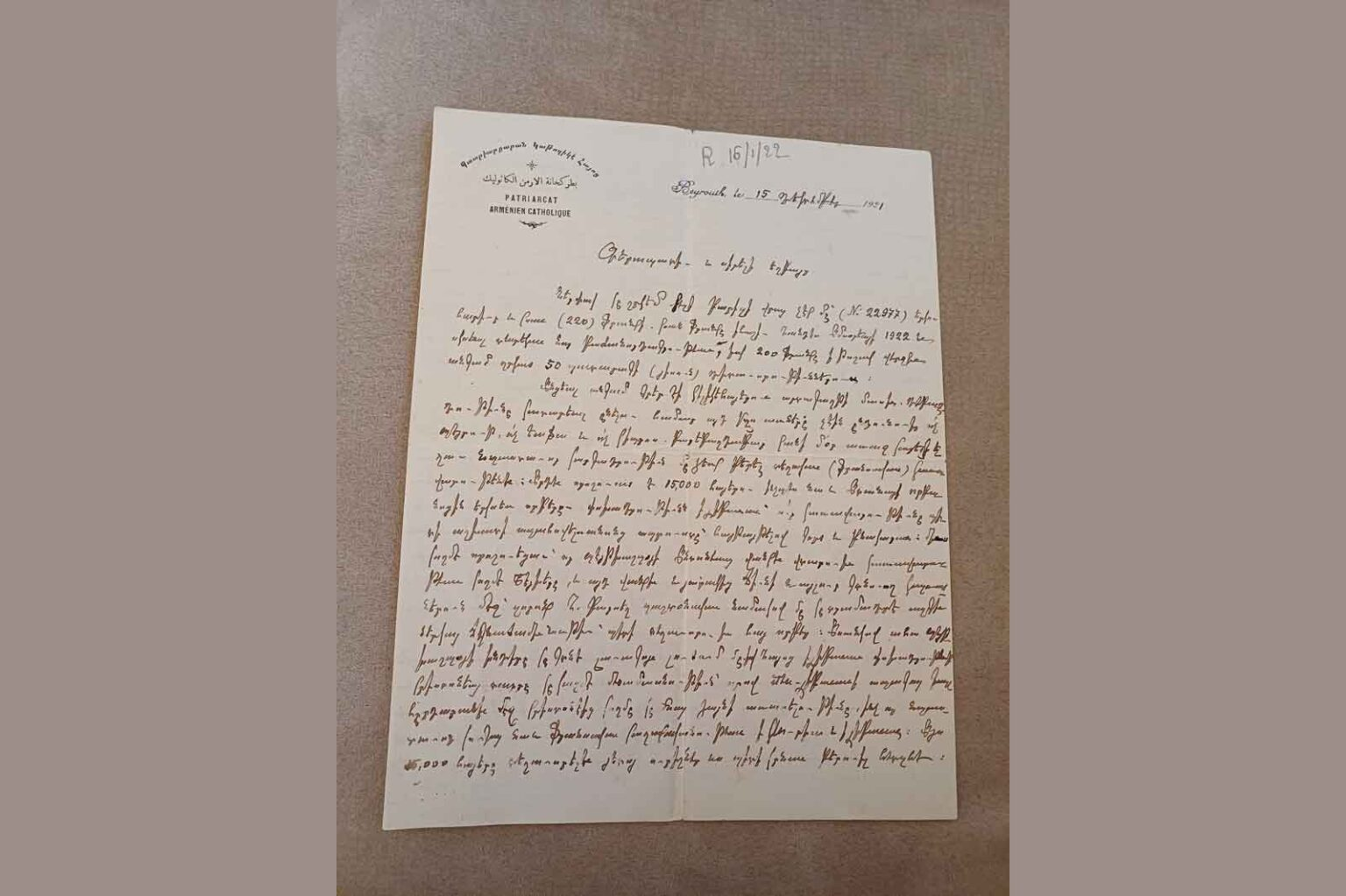
A letter written on December 15, 1921, is today considered a valuable historical testimony, revealing details of the displacement of Armenians from Cilicia and their reception in Lebanon during the years of the French mandate.
The letter, sent from Beirut to Paris, was authored by Vartabed Mesrop Keshishian and addressed to Vartabed Poghos Aris of the Zmmar congregation. The document presents the difficulties faced by Armenian refugees after leaving Cilicia.
Keshishian writes that initially neither Beirut, nor Jaffa, nor Cyprus were ready to receive the refugees. However, through the intervention of local French authorities, it was possible to organize the relocation of about 15,000 Armenians and children from the Adana orphanage to Lebanon. The French government committed to providing them with housing and employment.
The letter also refers to the Beit Khashbo Monastery, where it was decided to accommodate Armenian orphans by allocating the monastery and its surrounding properties for this purpose. This step was considered an important solution in the crisis situation of Armenian refugees.
The author also emphasizes the political significance of the relocation, noting that the increase in the Christian population in Lebanon could influence the country’s future political balance.
The letter also provides important information about ecclesiastical and educational initiatives, including plans to establish a girls’ school in church-owned buildings to support the refugee community.
According to historians, the letter of Vartabed Mesrop Keshishian is not only a personal document but also an important historical record presenting the hardships of Armenian refugees, the efforts made for their rescue, and the role of Armenian community structures during those years.