
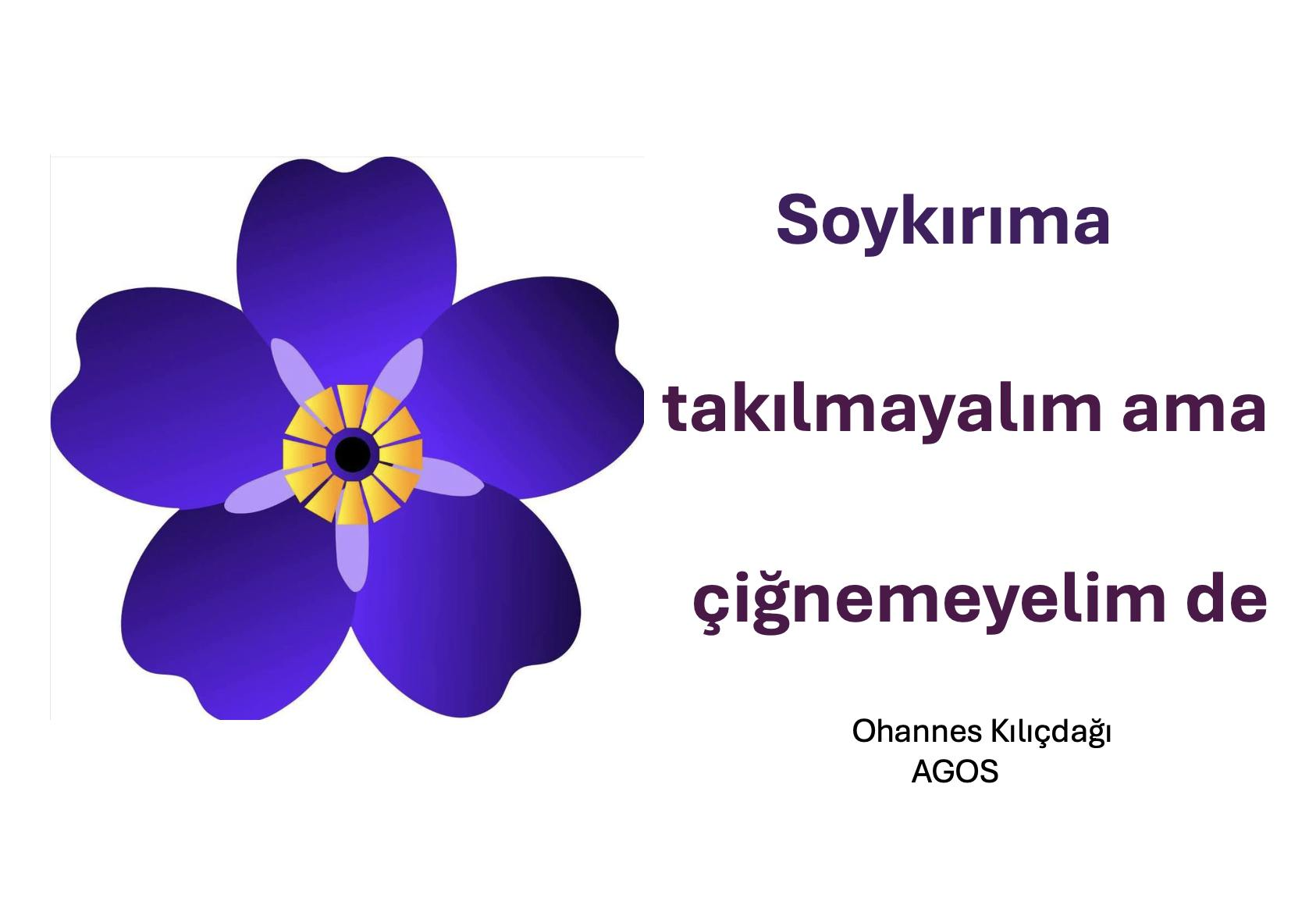
Armenian intellectual from Western Armenia, Hovhannes Kılıçdağ, in his latest publication, addressed discussions surrounding the memory of the genocide committed against Armenians, political discourse, and the positions of modern Armenia. In an article published in the AGOS weekly, the author emphasizes that the topic of genocide should not become a tool for political manipulation, but at the same time it cannot be presented as a “natural” or “understandable” historical consequence.
The author discusses the more moderate and restrained language observed in recent years in the Prime Minister of Armenia’s April 24 messages, in connection with the process of normalizing relations with Turkey. In his assessment, the pursuit of peace and stability is understandable, and Armenia cannot live in a state of constant conflict. However, according to the author, there is a red line that must not be crossed: the moral and historical significance of the genocide must never be diminished.
The article emphasizes that April 24 must прежде всего remain a day of remembrance, mourning, and the demand for historical justice. According to the author, that day should not become a platform for political competition or for appeasing external forces.
Hovhannes Kılıçdağ also notes that the issue of the genocide committed against Armenians is not only a historical topic, but an important component of the present and future of the Armenian people. According to him, the genocide has had a decisive impact on the identity, psychological state, and historical fate of Armenians living in different countries.
The author concludes that it is possible to build peaceful relations with neighbors, but that path cannot come at the expense of historical memory and the dignity of the victims.